DC (Direct Current) and AC (Alternating Current) charging stations are the two main types of electric vehicle (EV) chargers, differing in technology, charging speed, and usage scenarios. Here’s a detailed comparison:
1. How They Work
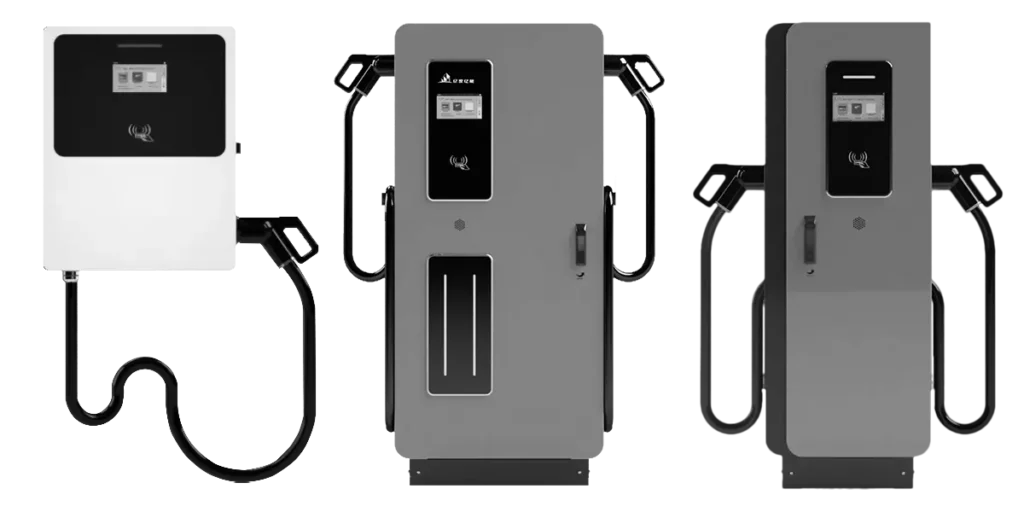
DC Fast Chargers
- Direct DC Output: Bypasses the vehicle’s onboard charger (OBC), converting grid AC power to DC externally for high-speed charging.
- High Power: Typically 50kW–350kW or more (e.g., Tesla Superchargers, CCS/CHAdeMO).
AC Slow/Medium Chargers
- AC Output: Relies on the vehicle’s OBC to convert AC to DC, limiting charging speed.
- Lower Power: Usually 3.7kW (single-phase) to 22kW (three-phase), depending on OBC capacity.
2. Key Differences
| Feature | DC Chargers | AC Chargers |
|---|---|---|
| Charging Speed | Fast (30 mins to 80%) | Slow (6–10 hours for full charge) |
| Voltage/Current | High (200–1000V), high current | Low (220V/380V), standard current |
| Size & Cost | Large, expensive (needs converters) | Compact, affordable (home-friendly) |
| Compatibility | EVs with fast-charging support | All EVs (limited by OBC power) |
3. Where Are They Used?
DC Fast Chargers
- Highways/Rest Stops: Quick top-ups for long-distance travel.
- Public Charging Hubs: Shopping malls, urban fast-charging stations.
- Commercial Fleets: Buses, trucks, and taxis needing rapid charging.
AC Chargers
- Homes/Residences: Overnight charging at lower electricity rates.
- Workplaces: Charging while parked for hours.
- Destination Charging: Hotels, apartments, and parking lots.
4. Why Both EV Chargers Types Exist?
- Speed vs. Convenience: DC for urgent needs, AC for daily use.
- Battery Health: Slow AC charging extends battery lifespan.
- Grid Impact: DC stations require high power, while AC is grid-friendly.
5. Future Trends of EV Chargers Chargers
- Ultra-Fast DC (800V+ systems): Porsche Taycan, Hyundai E-GMP (18-min charge).
- Bidirectional AC (V2G): EVs as home/grid power sources (e.g., Ford F-150 Lightning).
Choose DC for speed, AC for cost efficiency and routine charging.