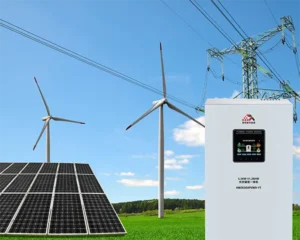
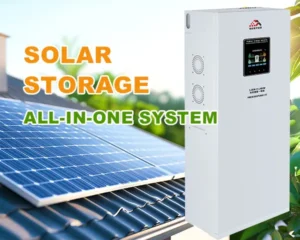
Solar Energy Storage Systems (SESS) integrate photovoltaic (PV) generation with energy storage to enable efficient energy utilization and stable supply. Their primary goal is to store surplus electricity during peak sunlight hours and release it when needed, balancing supply-demand fluctuations. Below is an analysis of technical requirements and performance characteristics:
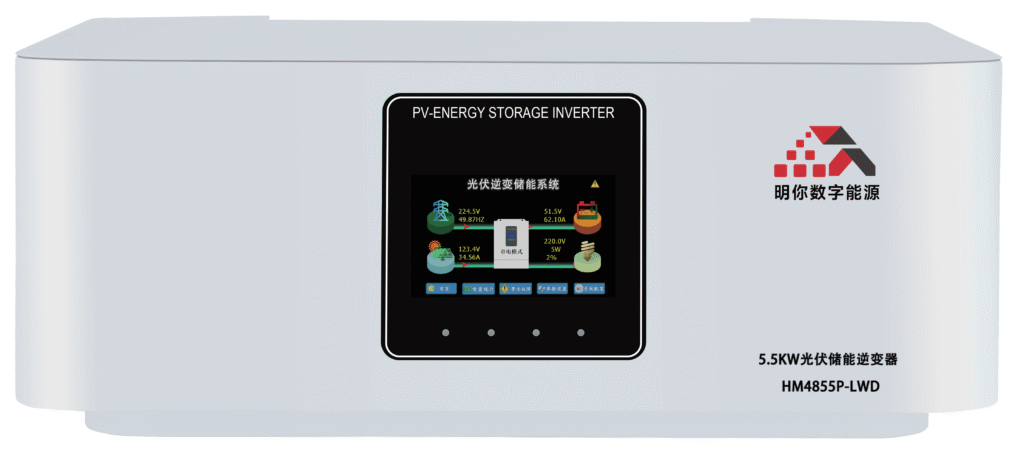
1. Technical Requirements
- System Compatibility
- PV Component Matching: The storage system must align with the output voltage and current range of PV panels (typically 200V–1500V) to ensure efficient energy conversion.
- Grid-Tied/Off-Grid Compatibility: Support both grid-tied (feeding energy back to the grid) and off-grid modes (independent power supply), requiring bidirectional inverters and intelligent switching devices.
- Energy Storage Technology Selection
- Battery Types:
- Lithium-Ion Batteries: High energy density (150–250 Wh/kg), long cycle life (3,000–6,000 cycles), suitable for residential and small commercial applications.
- Lead-Acid Batteries: Low cost (~0.1–0.2 USD/Wh) but low energy density (30–50 Wh/kg) and short lifespan (500–1,000 cycles), ideal for short-term backup.
- Flow Batteries (e.g., Vanadium Redox): Suitable for large-scale storage with long cycle life (>15,000 cycles), though low energy density (20–30 Wh/kg) and high upfront costs.
- Emerging Technologies: Solid-state batteries (enhanced safety) and sodium-ion batteries (resource-efficient) are in early commercialization stages.
- Energy Management Capabilities
- Charge/Discharge Control: Requires a smart Battery Management System (BMS) for overcharge/overdischarge protection, temperature monitoring, and cell balancing.
- Power Regulation: Dynamic response to grid demands (e.g., frequency regulation) with fast charge/discharge rates (C-rate ≥1C).
- Predictive Algorithms: Optimize storage strategies using weather forecasts and usage patterns to maximize self-consumption (e.g., Tesla Powerwall’s AI-driven scheduling).
- Safety Requirements
- Fire/Explosion Prevention: Lithium-ion systems need thermal runaway warnings (smoke sensors, cooling mechanisms).
- Electrical Isolation: DC circuit breakers and insulation monitoring to prevent leakage risks.
- Environmental Resilience: Wide operating temperature range (-20°C to 50°C) and IP65+ ingress protection.
- Cost-Effectiveness and Scalability
- Upfront Costs: Lithium-ion systems (~300–600 USD/kWh), lead-acid (~100–200 USD/kWh).
- Modular Design: Scalable capacity (e.g., Huawei LUNA2000 stackable batteries).
- Levelized Cost of Energy (LCOE): Includes maintenance, replacement, and recycling costs (e.g., lead-acid recycling rate >98%).
2. Performance Characteristics
- Energy Conversion Efficiency
- AC-AC Round-Trip Efficiency: Lithium-ion systems achieve 85–95%, lead-acid 70–80%, and flow batteries 65–75% (due to pump losses).
- Self-Discharge Rate: Lithium-ion (<5% monthly), lead-acid (3–20%), flow batteries (negligible).
- Cycle Life and Degradation
- Lithium-Ion: Retains 80% capacity after 3,000–6,000 cycles (~10–15 years), with degradation influenced by temperature and depth of discharge (DoD).
- Lead-Acid: Lifespan of 3–5 years if DoD ≤50%; deep discharges accelerate aging.
- Flow Batteries: 20+ years with minimal capacity loss.
- Response Speed and Power Density
- Lithium-Ion: High power output (C-rate 2–5C), millisecond response, ideal for frequency regulation and short-term backup.
- Flow Batteries: Decoupled power/energy capacity, suited for long-duration storage (4–12 hours) but low power density (<0.1 kW/L).
- Supercapacitors: Extreme power density (10–100 kW/L) but low energy density (5–10 Wh/kg), used for instantaneous power compensation.
- Environmental Impact
- Carbon Footprint: Lithium-ion production emits ~70–100 kg CO₂/kWh, but lifecycle emissions offset depend on renewable energy adoption.
- Recyclability: Lead-acid recycling rate >98%; lithium-ion recycling (e.g., hydrometallurgical processes) is improving but remains costly.
- Application-Specific Adaptability
- Residential Storage: Compact, quiet (<40 dB), 5–20 kWh capacity, off-grid backup (e.g., LG Chem RESU).
- Commercial/Industrial: 100 kWh–1 MWh capacity, demand management, and peak shaving (e.g., Fluence StackOS).
- Grid-Scale Storage: >10 MWh capacity, focusing on long-duration storage (flow batteries) and frequency regulation (e.g., Tesla Megapack).
3. Challenges and Future Trends
- Current Challenges
- Cost Barriers: Lithium price volatility (e.g., lithium carbonate surged from $5,000 to $50,000/ton) increases system costs.
- Safety Risks: Thermal runaway incidents (e.g., 23 fires in South Korea, 2017–2019) demand improved BMS and materials.
- Recycling Infrastructure: Global lithium battery recycling rate <5%, necessitating standardized policies and closed-loop supply chains.
- Future Directions
- Material Innovations: Solid-state electrolytes (e.g., QuantumScape) and sodium-ion batteries (CATL) aim to reduce costs and enhance safety.
- Hybrid Systems: Combine lithium-ion with supercapacitors/flow batteries to balance power and energy needs.
- AI and Digital Twins: Machine learning optimizes energy dispatch and predicts battery health (e.g., Siemens Sidrive IQ).
4. Selection Recommendations
Prioritize based on needs:
- High Power, Short-Term Backup: Lithium-ion (e.g., Tesla Powerwall).
- Long-Duration, Low Maintenance: Flow batteries (e.g., Invinity Energy Systems).
- Ultra-Low Cost: Lead-acid (e.g., Trojan T-105).
Conclusion: Solar energy storage systems prioritize efficiency, safety, and cost-effectiveness, with future advancements targeting higher energy density, longevity, and intelligence. These systems are pivotal for scaling renewable energy adoption globally.