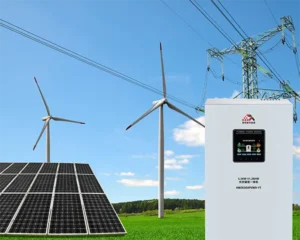
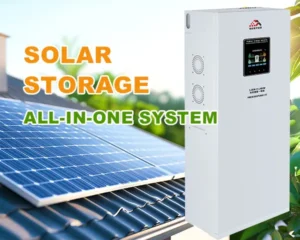
A solar-storage all-in-one system (also called a PV-storage hybrid system) integrates solar power generation with energy storage into a single unit. It enables solar energy harvesting, electricity storage, and intelligent energy management. Photovoltaic (PV) panels convert sunlight into electricity, while excess energy is stored in batteries for later use (e.g., at night, during cloudy weather, or peak electricity demand periods). This improves energy efficiency and reduces reliance on the grid.
Key Components
- Solar Power Generation Module
- Solar panels: Convert sunlight into direct current (DC) electricity.
- Inverter (or hybrid inverter): Converts DC to alternating current (AC) for household/industrial use and manages power flow.
- Energy Storage Module
- Lithium batteries (e.g., LiFePO4): Store surplus solar energy.
- Battery Management System (BMS): Monitors battery health, ensuring safety (overcharge/discharge protection, temperature control).
- Energy Management System (EMS)
- Intelligently controls power generation, storage, and consumption, supporting grid-tied, off-grid, or hybrid modes.
- Additional Components
- Grid connection: Allows excess power to be fed back into the grid (if permitted).
- Off-grid switching: Automatically switches to battery power during grid outages.
How It Works
- Daytime Operation
- Solar panels generate electricity, prioritizing immediate use. Excess energy charges the battery.
- If the battery is full, surplus power can be exported to the grid (if grid-tied).
- Nighttime or Cloudy Days
- The system draws stored energy from the battery to power loads.
- If the battery is depleted, it switches to grid power (in hybrid mode).
- Peak/Off-Peak Electricity Pricing
- Charges from the grid during low-cost periods and discharges during high-cost periods to save money.
Applications
- Households: Reduces electricity bills, enables self-consumption, and provides backup power.
- Commercial/Industrial: Cuts peak demand charges and ensures uninterrupted power for critical equipment.
- Off-grid Areas: Provides independent power in remote locations (e.g., mountains, islands).
- Emergency Backup: Replaces diesel generators for hospitals, telecom towers, etc.
Key Advantages
- High Energy Efficiency
- Minimizes solar curtailment and maximizes self-consumption.
- Cost Savings
- Leverages time-of-use (TOU) pricing to reduce electricity costs.
- Eco-Friendly
- Lowers carbon footprint by reducing fossil fuel dependence.
- Flexibility & Reliability
- Supports grid-tied, off-grid, and hybrid operations for diverse needs.
Common Types
- Grid-Tied: Connects to the grid, allowing excess power export (ideal for net metering regions).
- Off-Grid: Operates independently (suitable for remote areas).
- Hybrid: Combines grid-tied and off-grid capabilities with seamless switching.
Future Trends
- AI Optimization: Smart algorithms for optimal charging/discharging strategies.
- Modular Design: Easy expansion for customized energy needs.
- Advanced Battery Tech: Higher energy density and safety (e.g., liquid cooling).
- Virtual Power Plants (VPPs): Aggregates distributed storage for grid balancing.
Solar-storage all-in-one systems are a key part of the future energy landscape, ideal for users seeking sustainability, cost savings, or energy independence.